NovelToGame
Five skills that turn a novel into a playable game: cited source analysis, a genre choice it has to defend, a build that fits your machine, and a blind first-player QA run.
- By ZenStory AI
- Claude Code
- Codex
- Kimi Code
- MIT
- Source repository
NovelToGame is five skills for Claude Code, Codex or Kimi Code. Give it a novel and, if you have one in mind, a target platform or engine. It reads the whole book, writes an adaptation workspace that keeps the source evidence separate from the design choices, builds for the runtime you approved, and blind-playtests the result as a first-time player before recording one complete verification run.
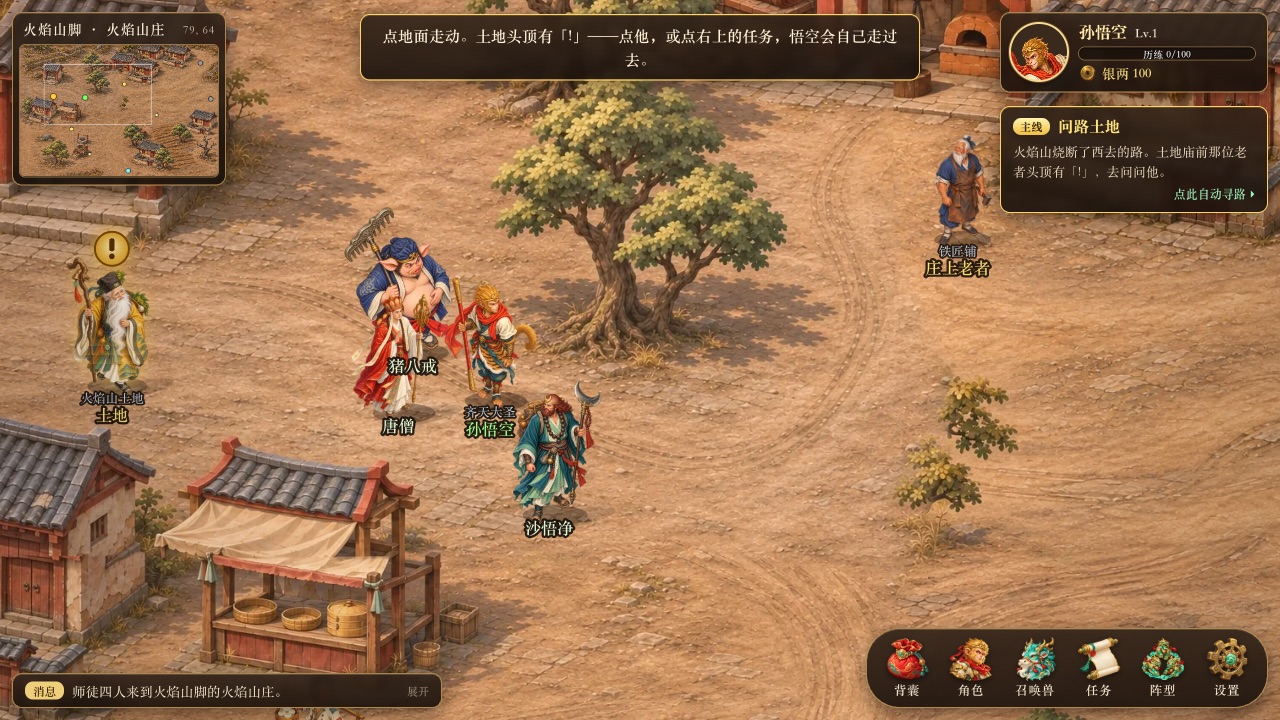
Its two public examples are both browser games: 三借芭蕉扇, a turn-based Journey to the West RPG covering chapters 59 to 61, and 金瓶梅 · Ledger of Desire, an interactive film marked 18+. The first one is on this site. The README names no model.
Install
npx skills add zenstory-ai/novel-to-game -g -y -a claude-code -s '*'
Then tell your agent what to make
Use novel-to-game quick to adapt this novel into a fully playable game.
Recommend the target platform, genre, and engine from the source, and keep the first build to about 15 minutes.
Let the player enter the world as an original character with a new playable route through its conflict.
Games made with NovelToGame
What it does
- Keeps the book and the design apart. A source bible cites a chapter or file location for each fact and labels it immutable, adaptable, open or conflicted. Anything the novel does not define is recorded as a design invention and never smuggled in as fact.
- Eliminates genres instead of defaulting. The concept stage compares real alternatives and kills directions with named one-strike vetoes: the core loop ignores the novel's central tension, stripping the proper nouns leaves a generic template, or the player only spends resources to release a fixed plot.
- Keeps the borrowed genre's outer features. A systems game has to list which outer features of the genre it implements, degrades or drops, and why. As the README puts it, a Fantasy Westward Journey-style RPG is not shipped as a bare chain of fights.
- Builds for the runtime you approved. The product brief locks platform, engine, target runtime and the runtime actually available for testing. The build probes what your machine offers and picks a fitting route; a missing native toolchain may not silently become a web page. The design documents are engine-independent Markdown you keep.
- Two rounds of QA. First an isolated blind playtest from the title screen, by a session that has read neither the source nor the design. Then one end-to-end run proving launch, render, input, core loop, at least one designed outcome, and restart to the initial state. Status is only NOT_RUN, FAIL or PASS.
What you need
- Claude Code, Codex or Kimi Code, plus npx
- The runner and the installer
- Without it: Required
- A novel you have the right to adapt
- Every stage reads it: analysis, concept, world design, build
- Without it: Not required by the tooling, but the skills do not clear rights for you and QA does not certify them
- An engine or toolchain, if you target one
- The build probes Three.js, image and text-to-3D models, Blender CLI/Python/MCP, Canvas/WebGL, or native Godot and Unity
- Without it: A substitute runtime only if the brief already approved one, with the tested and untested parts recorded separately
- Optional image and voice generation
- Only when art direction selects it; voice is off by default
- Without it: No generated art or voice; the game is still built from what your environment has
Before you start
- No cost is quoted. The README says the public examples' progress files record neither wall-clock time nor token counts, so it deliberately gives no number; token usage is billed by your coding agent, and generation services, engine licences or hosting may bill separately.
- A full run may span more than one session. There is a resume mode for that: it reads the progress file and the documents that actually exist, and works out the last stage that was genuinely finished.
- There is no public example yet that targets a native engine or console. Both examples are dependency-free static browser games because their briefs chose the browser.
- Many of the skill's references are written in Chinese, and the README says so.
- A PASS means six mechanical checks in one run on the tested runtime. The README states plainly that it does not prove subjective fun, balance, other browsers or devices, rights, or commercial release quality.
FAQ
- How do I install NovelToGame?
- One command per agent, from the README: `npx skills add zenstory-ai/novel-to-game -g -y -a claude-code -s '*'` for Claude Code, `-a codex` for Codex, `-a kimi-code-cli` for Kimi Code. Drop -g to install into the current directory only. Re-running the same command updates it.
- What are quick, director and resume?
- quick is the default: the agent drafts a brief with sensible defaults and stops only where a real fork in platform, core gameplay, adult content, real persons, copyright or asset licences, paid services or irreversible spend would change the direction. director stops for your call at concept, at what to cut after the graybox playtest, and at visual target images. resume continues an interrupted run from the last stage that was genuinely finished.
- I asked for an interactive story and got cards and a stat panel. How do I get scenes and choices?
- Say so in the request. That locks the narrative-led experience profile in the product brief, which then carries through concept, design, art, build and QA, so choices are written as concrete words and deeds with later scenes that read them rather than a hidden score. The README says this track was added after a reader reported exactly this failure.
- Will it fall back to a web page if my engine toolchain is missing?
- No. The build may not switch to a web page when the target toolchain is unavailable; only a substitute runtime already approved in the brief may be used, and then target runtime, tested runtime and the uncovered items are recorded separately.
- What licence is it under?
- MIT. This page only describes the skills and links to the author's repository.
MIT. This page describes the skill and links to ZenStory AI's repository; the skill's files live there. GitHub
All game-making skills